Français
 Deutsch
 Nederlands
A Mythic Hill, a founding legend
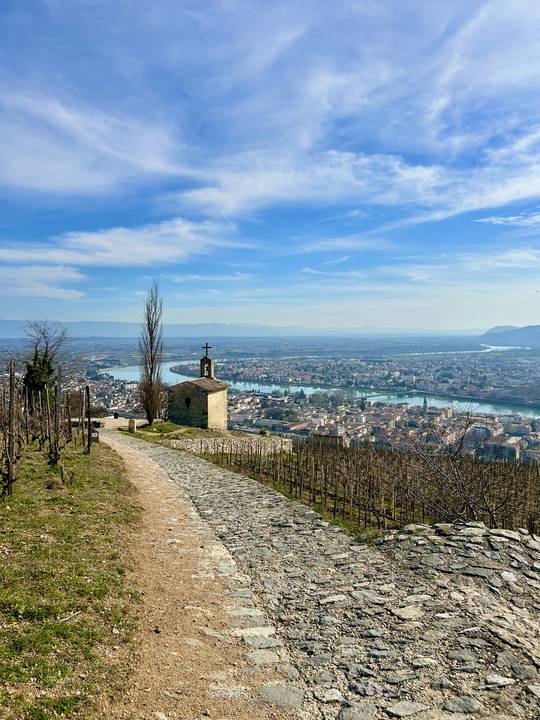
For a hill with such fame, a myth was surely needed. This mysterious story is attributed to the Knight Henri-Gaspard de Sterimberg! Returning from the Albigensian Crusade in the 13th century, he reportedly retired to the top of this hill overlooking the Rhône. Seeking peace and tranquility, he built a small chapel on the heights of the slope, on the site of an ancient Roman temple dedicated to the legendary Hercules.
A Hermit’s life that gave its name to the Hermitage Appellation
Henri-Gaspard de Sterimberg then began cultivating vines on the hill. Through hard work and the richness of the terroir, these wines grew increasingly famous among pilgrims and travelers. Since then, the chapel has stood the test of time.
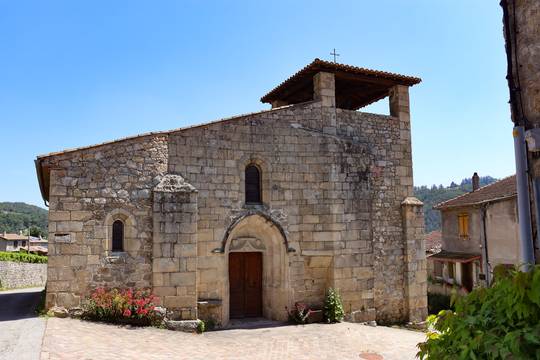
Today, the Hermitage hill is crowned by its iconic chapel dedicated to Saint Christopher, the patron saint of travelers. Replacing Sterimberg’s original sanctuary, this chapel, now owned by the Paul Jaboulet Aîné winery, has been listed as a Historic Monument since 1926 and remains a must-visit spot to admire one of the finest panoramic views of the Rhône Valley.
The Hermitage hill was classified as a national heritage site in 2013 (under natural and cultural sites) in recognition of its historical, winemaking, and scenic significance. As for Knight de Sterimberg, his name continues to echo through the centuries: it proudly features on some of the most prestigious cuvées from the region's top wineries.
Hélène de Tournon: The tragedy of a fatal love
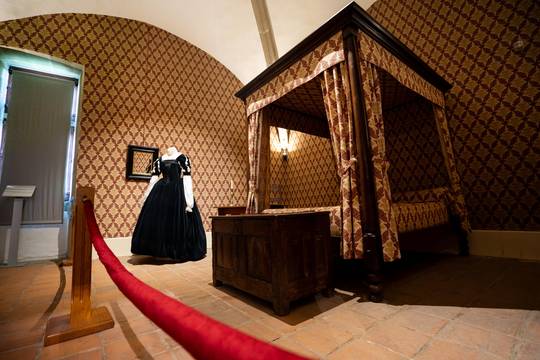
This second story belongs to the beautiful Hélène de Tournon. Born in 1559, this young heiress to the Counts of Tournon fell madly in love with the Marquis de Varambond. Unfortunately, their love was impossible, as the Marquis was destined to enter holy orders. Heartbroken and desperate, young Hélène reportedly died of grief at just 18 years old. Her mother, Claude, a lady-in-waiting to Queen Marguerite de Valois (better known as Queen Margot), shared this tragic story with the Queen. Moved by Hélène’s sad fate, Marguerite recounted it in her memoirs, helping to immortalize the tragedy.
It is even believed that this story inspired Shakespeare for the character of Ophelia in Hamlet!
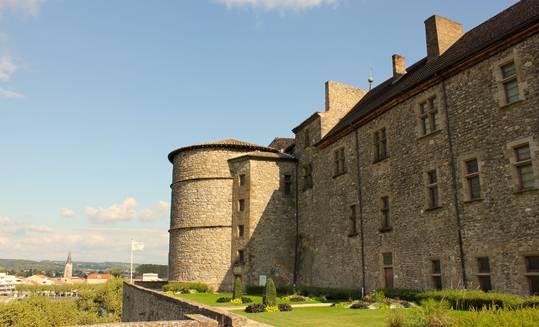
Today, her bedroom can still be visited inside the Château de Tournon. Perhaps you will hear young Hélène’s weeping during your visit…
Through the Château’s collections, you will also discover the history of the Counts of Tournon, Rhône navigation, the bridges created 200 years ago by Marc Seguin, and terraces offering splendid panoramas of the town…
Boucieu-le-Roi – Pierre Vigne and the missionary’s miracles
In the ancient alleys of Boucieu-le-Roi, whispers tell that the tomb of Pierre Vigne holds miraculous powers…
Born in Privas in 1670, Pierre Vigne grew up in a Christian family during a troubled era marked by religious tensions following the Revocation of the Edict of Nantes. Ordained a priest in 1694 within the Congregation of the Mission (the Vincentians) founded by Saint Vincent de Paul, he chose a few years later to pursue his ministry as an itinerant, independent diocesan missionary priest. For nearly forty years, Pierre Vigne traveled through the villages of Vivarais, Dauphiné, Drôme, and Velay, often on foot, preaching, hearing confessions, visiting the sick, and celebrating Mass in the most remote places. In 1712, this passionate priest settled in Boucieu-le-Roi, where he founded the Order of the Blessed Sacrament, offering comfort and light to lost pilgrims and homeless orphans. He also erected a monumental Stations of the Cross along the hillside—one of the very first of its kind in France.
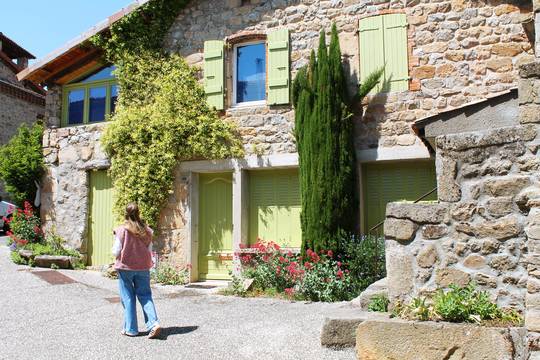
Even today, some claim that his tomb, bathed in a strange serenity, is imbued with his eternal goodness… It is said to release signs and soothing chills of healing to those who approach it with faith and humility. Local tradition in Boucieu dictates taking young children to take their first steps on Pierre Vigne’s gravestone inside the church so that they may "walk straight" for the rest of their lives! The village is now certified as a "Village de Caractère" (Village of Character) and listed among the most beautiful in the Ardèche region! It is also nicknamed the village of a thousand secrets… What better way to unveil all these mysteries than a guided tour of Boucieu-le-Roi?
The Dragon of Saint-Donat-sur-l’Herbasse
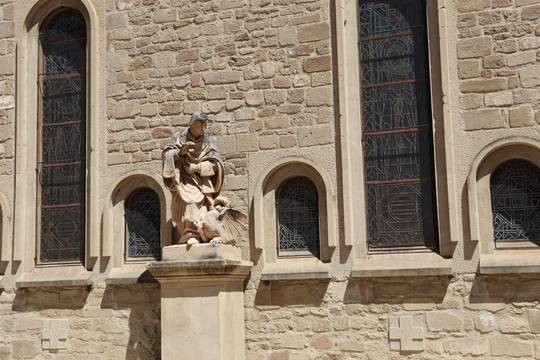
Over in Saint-Donat-sur-l’Herbasse (known as Jonvinzieu at the time), legend has it that a scaly dragon lived in the marshes of the Herbasse River, where it meets the Merdaret stream, back in the 8th century. This monstrous creature struck terror among the locals, devouring children. The lair of this terrifying monster was quickly identified, and it is said that when Saint Donat passed through the region, the villagers begged for his help. Moved by faith and courage, the holy man laid hands on the beast and managed to tame it. Overcome by Saint Donat’s divine power, the dragon lay down at his feet, bringing peace and prosperity back to the village.
Legend or reality? There is even a statue depicting this scene in the cloister of the Palais Delphinal…
Family activity: The treasure hunt "In Search of the Healing Potion" is accessible for free via the Baludik mobile app ! "A long time ago, a small dragon made its home in the marshes of our beautiful village of Saint-Donat-sur-l’Herbasse. It lived quietly, avoiding humans… But recently, residents have noticed a lot of damage and destruction in the fields…"
The Legend of the Afars in Vaudevant
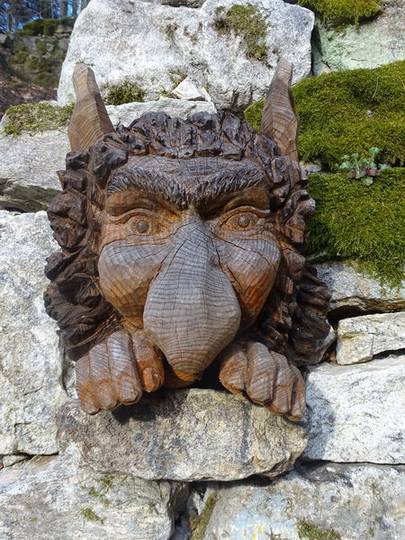
Along a hiking trail, you will pass near a carved cave said to have been inhabited by strange little beings: the Afars. They are men and women much smaller than us, about the size of a child. They reportedly have pointed ears and a single eye in the middle of their forehead, giving them a Cyclops-like appearance! Most of the time they go naked, though sometimes they dress in foliage. However, you won’t see them during the day, as they are strictly nocturnal creatures. When night falls, they come out to scavenge. Around farms, they steal vegetables from gardens, as well as household items and laundry. They even milk cows to feed their children. Some were allegedly caught, hindered by stolen boots or wooden clogs that were far too big for them. The Afars spoke proper and pure Occitan, and their laments caused such regret to those who captured them that they were always set free!
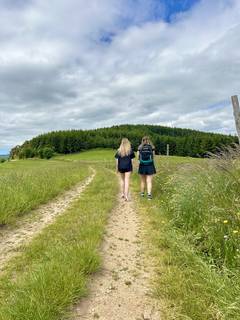
Take the Le Col du Gibet hiking trail starting from the village of Vaudevant! The braves among you can set off at night to perhaps encounter one of these curious creatures!
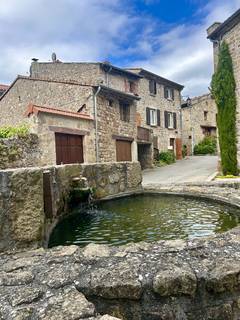
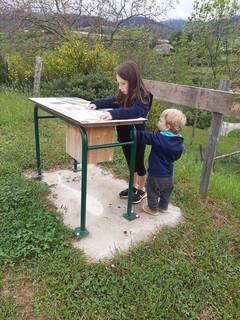
The small village of Vaudevant offers a pleasant, peaceful countryside setting. Picturesque in character, it features restored 15th-century exposed-stone houses. The streets are adorned with wooden plaques beautifully carved by a local artist. It is also the perfect place to walk the interpretive trail « Sur les traces de Marie Mourier » . This stroll through the heart of the village invites you to discover the Occitan language and the story of Marie Mourier, an artist native to Vaudevant. The trail consists of about ten panels mounted on small school desks corresponding to 10 stops—including 8 audio stations in Occitan—allowing visitors to listen to her poems and songs in the langue d'oc.
Thought you knew the heritage around Tain-l’Hermitage and Tournon-sur-Rhône inside out? Did you know that some places are also home to such fascinating legends? Tales of faith, tragic love, or folklore, these ancient stories enrich a living heritage passed down from generation to generation, right on the border between reality and myth.
(permalink)